Astoria
Loft Space.
Tell us once what you're after — including the floors that never hit the listing sites. A person reads it. That's the whole thing.
Seven questions.
That's the whole thing.
Under two minutes. No account, no login. A person reads every one.
How much room do you need?
Before you tour, hear what to look for.
Structure, submarkets, and the questions worth asking on a walkthrough — including the ones that decide whether a floor works for what you make.
Evaluating Astoria industrial office lofts
A conversation about how to read these buildings before you sign — 5 minutes.
AI-narrated
Read the transcript
Host 1Imagine moving your startup into a new office, plugging in all your servers, and, you know, immediately blowing the power for the entire city block.
Host 2Yeah, that is a real nightmare scenario.
Host 1Right. Today's deep dive is all about understanding how to evaluate a commercial office loft in Astoria. And evaluating these spaces, well, it's nothing like walking into a shiny glass tower.
Host 2No, it really isn't. You're not just checking out the paint or, like, the view from the window. Touring these buildings is more like inspecting industrial hardware. You need to know if the building you're standing in was built to make something, to shoot something, or just to sit above a shop.
Host 1Okay, let's unpack this, because those three categories aren't random. The physical differences in these buildings directly stem from two historical anchors that are actually still operating today.
Host 2Exactly. I mean, back in the 1870s, William Steinway bought 400 acres out at the far end of Astoria.
Host 1To build a piano factory.
Host 2A massive piano factory. Plus worker housing, a library, a park, and even a streetcar line. And the company still makes pianos on that site today.
Host 1So that's exactly why the heavy industrial floors exist east of Steinway Street. Because he put them there.
Host 2Right. And then jumping to 1920, Famous Players–Lasky builds a huge film studio on 36th Street. It was Paramount's East Coast operation.
Host 1Oh, wow.
Host 2Yeah. And the Army ran it as a photographic center for nearly 30 years, starting in 1942. Now it's the Kaufman campus.
Host 1So that history literally dictates the physical space. It's the whole reason the intense power, the loading capabilities, and the high bays even exist.
Host 2Right. Nearly everything you tour was built for one of those two economies. It's why the grip houses and scenic shops are still the backbone here.
Host 1Which splits the market into three specific zones. You have the industrial blocks east of Steinway Street with drive-in access and, you know, the lowest rents.
Host 2But the longest walk to a train?
Host 1Yeah, exactly. Then there's the film cluster around 35th and 36th Avenues. These are converted factory buildings fitted for film production, so they command the highest rents. And finally, you have the small commercial floors over retail on Broadway and 30th Avenue. That's where you find the walkable spaces near the N and the W trains.
Host 2Right, where most of the small suites are. But wait, I have to push back here.
Host 1Sure.
Host 2Space is space, isn't it? If I'm touring an office, why can't I just use a standard office touring checklist? I mean, a floor plan is a floor plan.
Host 1Because a standard checklist completely ignores the actual mechanisms of these older buildings. Like, a listing might say it has a loading dock.
Host 2Which sounds great.
Host 1It does, but you have to actually ask if a 50-foot truck can genuinely make the tight street turn to get to that dock. Some Astoria blocks are way tighter than they look.
Host 2Oh, that makes sense.
Host 1Or take the power supply. You have to verify three-phase power amperage, because if you need an electrical upgrade, that runs on a utility company's timeline.
Host 2Ah, not a landlord favor.
Host 1Exactly. It could delay your opening for months. And you also need to confirm clear-to-deck ceiling heights.
Host 2Meaning measuring all the way to the actual roof structure, not just the bottom of the ductwork, right?
Host 1Right, to know your true vertical clearance. And you have to check the base building services. If the building has its original heat or just one slow freight elevator, you need a heavy build-out budget.
Host 2Wait, why does a slow elevator affect the budget so much?
Host 1Well, think about your contractors. You're paying them hourly just to stand in line waiting for that single elevator to bring up drywall.
Host 2Oh, wow, yeah, that adds up fast. So, given this really raw infrastructure, this neighborhood is just wrong for certain tenants.
Host 1It is. We have to be frank about the deal-breakers here. If your team needs a turnkey, finished lobby —
Host 2Or if your work depends on Manhattan clients dropping by from a midtown meeting.
Host 1Yeah, you should definitely look elsewhere. Astoria is further out than Brooklyn's loft districts, so there's no point pretending otherwise.
Host 2But for physical logistics, driving is genuinely unmatched by New York standards, right?
Host 1Oh, absolutely. You have the BQE, the Grand Central and the RFK all meeting right there. That is a large part of why the production business stayed.
Host 2But if I'm looking for one of these great logistical spaces, the good ones aren't publicly listed on the market. How do you actually find them?
Host 1It's tricky. Ownership in Astoria skews heavily toward families who have held the same building for decades. They really don't use brokers by default.
Host 2So, word of mouth still rules the neighborhood?
Host 1Essentially, yes. Or you have to tap into networks that already have those quiet relationships.
Host 2Well, that means you can just head to our website. You can fill out the short form on the site to match with off-market commercial office loft space directly. It's the best way to cut through the noise.
Host 1Absolutely. And to leave you with a provocative thought, tying back to that industrial hardware analogy we started with — if these heavy industrial floors survived a century of wild economic shifts…
Host 2From 19th century pianos to military films to modern digital production.
Host 1Exactly. What does their enduring, flexible utility say about the fragile, aesthetic-driven design of modern workspaces? Maybe a machine built to actually work will always outlast a building just built to look good.
Ditmars down to Broadway, the East River across to the expressway — a neighborhood that still makes pianos, television and food, on the cheapest working creative floors in this network.
Twenty minutes to Midtown, and easy to drive to.
Better than the rents suggest. The elevated runs the length of the neighborhood, and loading is genuinely easy by New York standards — a large part of why the production business stayed.
- Astoria–Ditmars Blvd
- Astoria Blvd
- 30 Av
- Broadway
- 36 Av
- 39 Av–Dutch Kills
Runs the length of the neighborhood on the 31st Street elevated and puts you in Midtown in about twenty minutes.
- Steinway St
- 46 St
- Northern Blvd
Steinway Street is the stop for the industrial blocks — still a walk to the buildings closest to Bowery Bay.
- Astoria / Hallets Point
Down the East River to Long Island City, Midtown East and Wall Street.
- Steinway St
- 21 St
- Ditmars Blvd
- Astoria Blvd
How people actually reach the studio campus and the blocks east of Steinway.
Worth knowing before a tour: the BQE, the Grand Central and the RFK all meet here, so a truck can reach almost any building easily. The industrial blocks east of Steinway are the part where the walk from a train is real.
A piano factory and a film studio, both still running.
1652 → today
Hallett's Cove
William Hallett takes a land grant on the cove facing Hell Gate, and a ferry crossing grows up around it. For the next two centuries this is a landing rather than a neighborhood — the point where Long Island met the boats going into Manhattan.
Named for a man who never came
Local landowners incorporate the village and name it after John Jacob Astor, the richest man in America, in the hope he'd invest in it. He reportedly put in five hundred dollars and never crossed the river to look at the place. The name stuck anyway.
Steinway Village
William Steinway buys four hundred acres at the far end of Astoria and builds a piano factory, plus worker housing, a library, a post office, a park and a streetcar line to reach it. The company is still making pianos on that site today, which makes it one of the last large manufacturers left inside the city.
Hell Gate Bridge
Gustav Lindenthal's steel arch carries rail across the East River at the neighborhood's northern edge — the longest steel arch span in the world when it opened, and the design Sydney later borrowed for its harbour. It is still the thing you see first from Astoria Park.
The studio opens
Famous Players–Lasky builds a film studio on 36th Street as Paramount's East Coast operation — the largest in the country outside Hollywood. The Marx Brothers, W. C. Fields and Rudolph Valentino all work there before the industry moves west for the weather.
The Army takes it over
The studio becomes the Signal Corps Photographic Center and spends nearly thirty years making training and documentary film for the military. The industrial waterfront quiets down around it, and for a while Astoria is a place people commute out of rather than into.
Kaufman, and the museum
The studio reopens, George Kaufman takes it on, and it becomes Kaufman Astoria Studios. The Museum of the Moving Image opens on the same campus in 1988. Sesame Street has been shot on those stages for decades, and the production ecosystem that grew up around them — grip houses, scenic shops, post rooms — is still the backbone of creative Astoria.
Still making things
Pianos, television, food, film and furniture, all inside the same square mile. The converted factory floors east of Steinway, the studio buildings around the Kaufman campus, and the small commercial floors along Broadway and 30th Avenue are the least expensive real creative space we handle anywhere — in a neighborhood that already has the tenants to prove it works.
Who you'd be sharing the block with.
- Kaufman Astoria Studios (36th St)
- Production offices around the studio campus
- Grip and lighting rental houses off Northern Blvd
- Post and edit rooms near 35th Ave
- Steinway & Sons (Steinway Place)
- Metal and wood shops in the Steinway industrial blocks
- Scenic and prop shops near the studio
- Sign and display fabricators off Northern Blvd
- The Cigar Factory (35th Ave)
- Artist and photo studios in converted factory buildings
- Music and rehearsal rooms off Steinway
- Design practices along 30th Ave
- Bakeries and commissary kitchens in the industrial blocks
- Importers and distributors toward Bowery Bay
- Food manufacturers off Northern Blvd
- Cold storage near the BQE
- The Greek tavernas on Ditmars and 31st
- Bohemian Hall Beer Garden (24th Ave)
- Middle Eastern cafés along Steinway
- The restaurant row on 30th Avenue
- Astoria Park under the Hell Gate Bridge
- The N and W elevated along 31st Street
- The ferry landing at Hallets Point
- Museum of the Moving Image (36th St)
Why bother
The best floors are gone before they're listed. Character space moves through people, not portals — so we do it the other way around. You tell us what you'd love. We keep an eye out.
You told us what you need. That's where it ends.
No newsletter, no CRM queue, no "just checking in." A person reads your brief and reaches out directly when a floor's worth showing you.
- 01
We never sell, share or rent your brief — not to landlords, not to other brokers, not to a data company.
- 02
No newsletters or mass blasts. When we get in touch, it's a direct email or text about a specific space.
- 03
A person reads it. Not a bot, not a queue in some CRM.
- 04
Tell us to stop and we stop. Simple as that.
The Definitive Guide to Astoria Loft Space
The Steinway industrial blocks, the film cluster around the Kaufman campus, and the cheapest working creative floors we handle.
Astoria not quite it?
We work the surrounding neighborhoods too. Mention it in the brief.
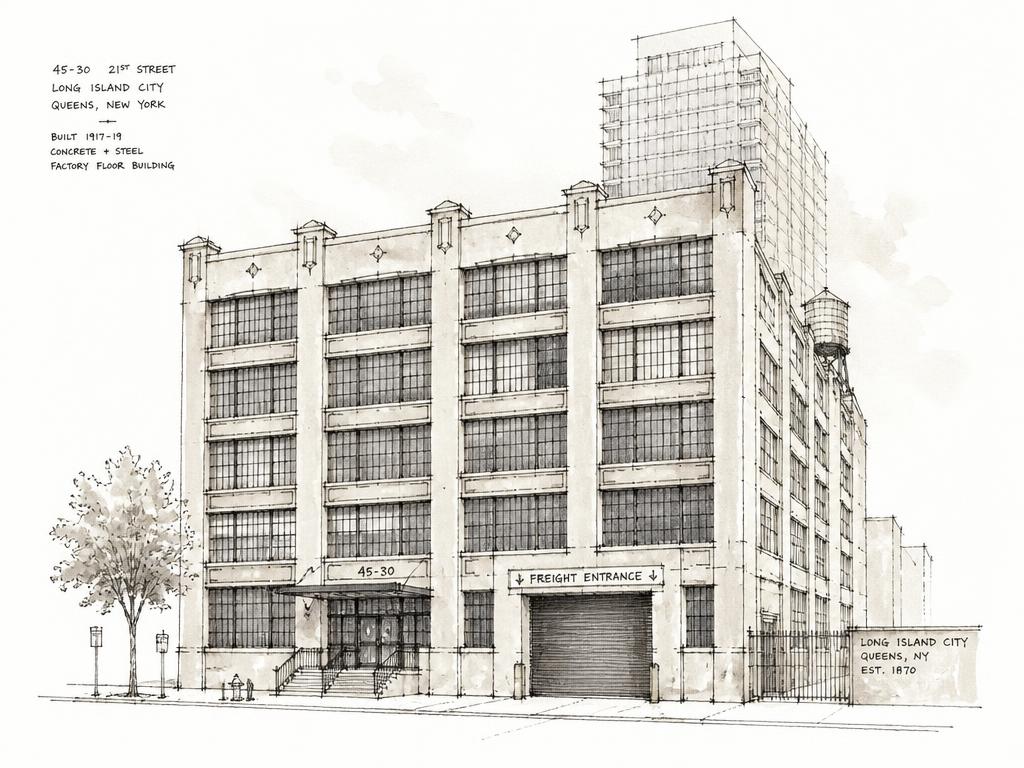
South along the river in Queens: taller concrete-and-steel factory floors and newer towers, with wide bays, real freight and more subway lines than anywhere nearby. Bigger plates and higher rents than Astoria's lower brick stock.
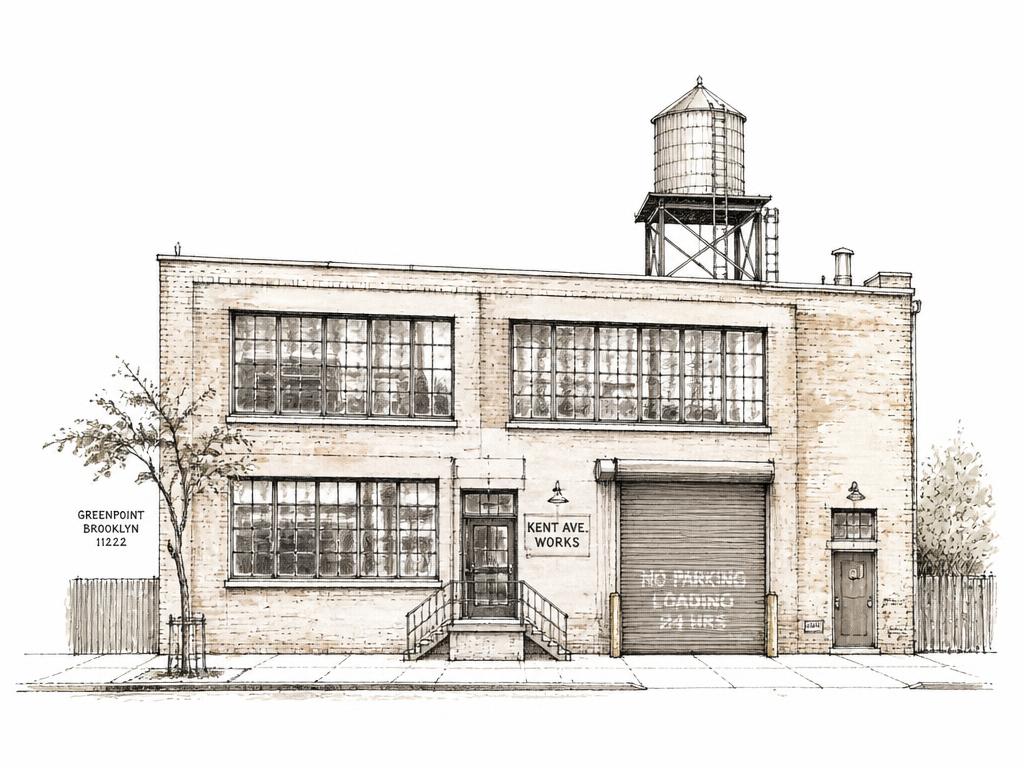
Across Newtown Creek in Brooklyn: low brick and timber workshops, small manufacturing yards and converted warehouse floors. Closest in feel to Astoria's smaller plates, on tighter streets.
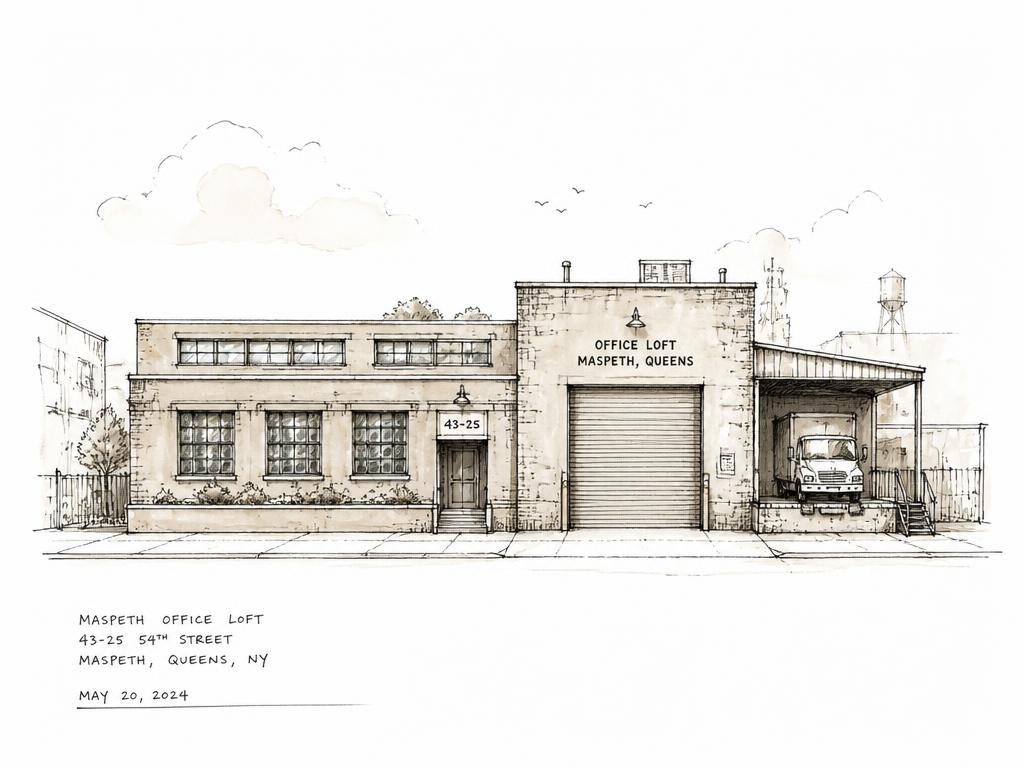
Inland Queens, east of the expressway: mid-century one- and two-story industrial buildings, drive-in doors and truck access rather than loft floors. Cheapest space nearby, and the furthest from a train.
What people ask before they take a loft in Astoria.
01What counts as a 'creative office loft' in Astoria?
02How much does loft space in Astoria cost?
03What's the smallest space I can rent in Astoria?
04How do I get to Astoria?
05Can I do fabrication, food production or light manufacturing here?
06Is Astoria actually good for film and production work?
07How is Astoria different from Long Island City?
08What are the classic Astoria loft buildings?
09What's the catch with Astoria space?
10Do you actually have off-market listings?
Got one we didn't cover? Put it in the brief above, or call 646-291-2018 or text.
The words that decide what you're signing.
Every term that turns up on a tour, in a floor plan or in a lease — what it means, why it costs you, and how it behaves in this neighborhood specifically.
- Industrial business zone (IBZ)
A designated area where city policy protects manufacturing and industrial use, discouraging conversion to other uses like residential or hotel — as opposed to land that could be rezoned away from industry over time.
Why it mattersIt's the reason a neighborhood stays genuinely industrial rather than gradually turning over to towers and new neighbors who complain about noise.
In AstoriaThe blocks east of Steinway Street sit inside a zone like this, which is part of why heavy manufacturing, food production and fabrication are still normal there — and why they're likely to stay that way, unlike the areas closer to the residential streets off 30th Avenue and Ditmars.
- Three-phase power
An electrical service delivering power across three alternating current phases rather than the standard single-phase supply — required to run heavier industrial motors and equipment.
Why it mattersIf a building doesn't have it, adding it runs on the utility company's timeline, not the landlord's — and that can delay an opening by months, not weeks.
In AstoriaWorth verifying the exact amperage available, not just whether three-phase service exists at all, before assuming a building can run what you need. This is one of the first things worth confirming on any Astoria tour involving equipment.
- Electrical service upgrade
Increasing a building's available electrical capacity — typically by working with the utility company to bring in more power, not something a landlord can simply authorize on their own.
Why it mattersIt sits outside a landlord's control and timeline, so a promised upgrade can take considerably longer than a standard build-out item.
In AstoriaConfirm what a panel actually has spare before signing, rather than assuming a landlord can add capacity on request. In the Steinway industrial blocks specifically, older buildings sometimes have less headroom than a tenant expects.
- Clear-to-deck
The distance from finished floor to the underside of the actual roof structure — true ceiling height, as opposed to a measurement taken to the bottom of ductwork.
Why it mattersA landlord quoting to the bottom of the ducts is giving you a shorter real number than the true vertical clearance.
In AstoriaWorth asking about explicitly here — Astoria's converted factory stock genuinely offers real height in places, but confirm the number is measured to the deck itself before it factors into your decision.
- Base building services
The core systems a landlord provides as part of the building itself — heat, elevators, basic electrical — as opposed to anything a tenant adds or upgrades themselves.
Why it mattersA building running on original heat or a single slow freight elevator isn't disqualifying, but it means budgeting for a heavier build-out than a more modern building would need.
In AstoriaWorth checking directly here — a fair amount of Astoria's older industrial and factory stock still runs on original systems, and the condition of those systems changes what your build-out actually costs.
- Single freight elevator
A building served by only one freight elevator, shared by every tenant and every delivery on every floor.
Why it mattersIt becomes a real bottleneck during a build-out — contractors billing by the hour end up waiting in line for the one elevator to bring materials up, which adds real, avoidable cost.
In AstoriaWorth asking about directly before signing, especially in the older Astoria factory buildings — confirm the elevator's condition and how many other tenants are competing for it during your build-out window.
- Truck turn radius
The physical space a delivery truck needs to turn onto or off a street to reach a building's loading area.
Why it mattersA listing can advertise a loading dock that a truck genuinely can't reach if the surrounding streets are too tight — worth confirming before assuming the dock is usable.
In AstoriaA real consideration on some of Astoria's older industrial blocks, which can be tighter than they look on a map. If regular large deliveries are part of your operation, walk the actual truck route before you commit.
- Loading dock
A raised platform or bay allowing a truck to back up level with a building's floor for loading and unloading, as opposed to unloading at street level.
Why it mattersIt's a genuine operational advantage for any business moving goods regularly — but its existence on a flyer doesn't guarantee it's actually reachable or usable.
In AstoriaFindable in Astoria's industrial blocks east of Steinway, alongside three-phase power and drive-in access — but confirm both the dock's condition and whether trucks can actually reach it given the surrounding streets.
- Grip house
A rental business supplying lighting, camera support and production equipment to film and television shoots.
Why it mattersBeing near one matters for any production-adjacent business — it's part of the practical infrastructure that makes a location workable for film work, not just the soundstages themselves.
In AstoriaA real part of Astoria's production ecosystem, clustered around the Kaufman Astoria Studios campus and dating back to the studio's original run as Paramount's East Coast operation in the 1920s. It's genuine supporting infrastructure, not incidental.
- Scenic shop
A workshop that builds and paints sets, backdrops and other physical elements for film, television and theatrical production.
Why it mattersLike a grip house, it's part of the reason a location works for production-adjacent tenants — proximity to the people who build what a shoot actually needs.
In AstoriaClustered near the Kaufman Astoria Studios campus alongside the grip and lighting houses — part of a production ecosystem that's been building up around those stages for decades, not something recently added.
- Rentable vs. usable square footage
Rentable square footage is what you're billed for; usable square footage is the actual floor area you can put desks or equipment on. The difference is the loss factor.
Why it mattersA rent quoted per rentable square foot can look cheaper than it is if the usable footprint is meaningfully smaller — worth clarifying which figure a landlord is quoting before comparing two buildings.
In AstoriaWorth asking directly here — Astoria's smaller, older buildings vary in how they calculate this, and it's one of the specific numbers worth confirming before comparing an industrial-block floor to one nearer the studio campus.
- Company town
A community built and largely owned by a single employer, historically including worker housing, civic buildings and infrastructure alongside the factory itself.
Why it mattersUnderstanding a building's origin as part of a planned industrial community explains a lot about its scale, construction quality and relationship to the surrounding blocks.
In AstoriaWilliam Steinway built exactly this at the far end of Astoria in the 1870s — a piano factory alongside worker housing, a library, a park and a streetcar line. Steinway & Sons still makes pianos on that site today, one of the last large manufacturers still operating inside the city.
- Family-held building
A property owned by the same individual or family for an extended period, typically without institutional management or a listing broker involved by default.
Why it mattersThese buildings often don't reach public listing sites at all — space moves by relationship and word of mouth rather than through a standard marketing process.
In AstoriaA genuinely common ownership pattern in Astoria, where ownership skews heavily toward families who've held the same building for decades. It's a real reason to work with someone who has existing relationships here rather than relying on public listings alone.
You know what to ask now. Tell us what you're after.
Seven questions, no account, nothing to download. A person reads every one — and comes back with floors that match, including the ones that never reach a listing site.
Written from buildings we've actually walked. If something here is wrong, or a term is missing, tell us — we'd rather fix it than have it repeated back to us on a tour.
Got a loft
building here?
We probably know a tenant for it. Quietly.
Let's talk→